How to Close Up Your Southwest Florida Home for the Summer
Heading north for the summer means leaving a Florida house alone through heat, humidity and the heart of hurricane season. This checklist walks through what to set, shut off, store and call about before you lock the door.
Get a Free Quote · Call 941-273-6928
Closing a seasonal home in Port Charlotte, Punta Gorda, Venice or Cape Coral is different from locking up a house up north. The two things that damage an empty Southwest Florida home most often are moisture and storms, and both peak while you are away. Hurricane season runs June 1 through November 30, and summer humidity can push an unconditioned house into mold territory quickly. A good close-up plan deals with both, then covers the paperwork so nothing falls through the cracks while you are gone.
Start with air conditioning, because it is your main defense against humidity. Do not turn the AC off. Florida Power & Light's guidance for snowbirds is to keep indoor humidity below 60 percent. With a non-programmable thermostat, FPL suggests setting it at 80 degrees. With a programmable one, FPL suggests cooling to 72 degrees for about two hours before sunrise and holding 88 degrees the rest of the day. If you use dehumidifiers, FPL suggests setting them around 58 percent, roughly one per 1,000 square feet, placed near sinks and showers so they can drain. Have the system serviced and the filter changed before you leave, since a clogged condensate line is a common summer failure.
Next, water and power. FPL recommends turning off the water heater at the breaker and shutting the main water valve, unless your home has a fire sprinkler system that needs water pressure. Either leave the refrigerator on its warmest setting with the ice maker off, or empty it, clean it and prop the doors open. Unplug electronics, put a few lamps on timers, and put fresh batteries in the smoke alarms. If you have a pool, FPL suggests running the pump about six hours a day and arranging for someone to check the water.
Then think about storms. Decide now how shutters or panels will go up if a storm threatens while you are away, and who will do it. Anything left on the lanai or patio, from chairs and cushions to potted plants and grills, can become a projectile in high wind. Bring it inside or out of harm's way before you leave rather than counting on a neighbor to do it in a rush. Photograph each room for your records and keep important documents with you, not in a drawer.
Mail and insurance are the paperwork side. USPS offers temporary forwarding for stays from about 15 days up to a year, and Premium Forwarding Service bundles your mail into a weekly shipment for a fee. Call your insurance agent before you go. Many policies have vacancy or unoccupancy provisions that can limit coverage after a set number of days, and requirements vary by carrier. Ask what applies to your home, whether a home-watch visit schedule helps, and get the answer in writing.
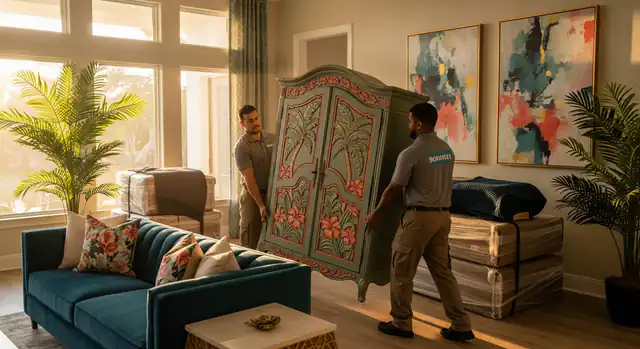
Finally, decide what should not stay in the house at all. Some owners move upholstered furniture, mattresses, artwork and electronics into storage for the season, especially in waterfront homes and ground-floor condos. Our snowbird moving service handles seasonal moves in both directions, and hurricane prep storage lets us pick up, wrap and hold furniture through the season, then redeliver when you are back. If you are shipping a few boxes or pieces north, boxes-only and partial-load shipments are an option too.
If you would like help closing up, call Flamingo Moving at 941-273-6928 or request a free written quote. Tell us your address, what you want stored or moved, and your departure date, and we will send a same-business-day estimate.
What's included
- AC and humidity plan (keep indoor humidity under 60%)
- Water heater breaker and main valve off
- Lanai and patio furniture brought inside or stored
- Temporary USPS mail forwarding
- Insurance vacancy question answered in writing
- Seasonal storage for furniture and valuables
A two-week countdown before you head north
Two weeks out, book any AC service, confirm who holds a key, and schedule storage pickup if you plan to use it. One week out, submit your USPS forwarding request, call your insurance agent, and cancel or pause newspaper and grocery deliveries. In the last two days, clear the lanai, set the thermostat and dehumidifiers, empty or adjust the refrigerator, shut off the water heater and main valve, and take a quick photo or video walk-through of every room.
Who checks on the house while you are gone
An empty house needs eyes on it after storms and during long stretches of summer heat. Many owners use a neighbor, a family member or a paid home-watch service. Whoever it is should have a key, your contact numbers, the location of the main water valve and breaker panel, and a plan for putting up shutters if a storm threatens. Ask your insurance agent whether regular check-ins affect your coverage.
Condos and HOA communities
If you live in a condo or HOA community, check the association's rules before you leave. Some require notice of extended absences, an emergency contact, or shutters installed by a certain date. If you are moving furniture out for storage, the building may require an elevator reservation and a certificate of insurance from the mover. We provide COIs to buildings, so tell us the management contact when you book.
Frequently asked questions
Should I turn off the AC when I leave Florida for the summer?
No. An unconditioned house can reach mold-friendly humidity quickly. FPL suggests keeping indoor humidity below 60 percent and, with a basic thermostat, setting it around 80 degrees.
How long can USPS forward my mail while I am up north?
Temporary forwarding can run from about 15 days up to a year. Premium Forwarding Service is a paid option that ships your mail in one weekly bundle.
Does my homeowners policy cover an empty seasonal home?
It depends on the carrier. Many policies include vacancy or unoccupancy provisions after a set number of days. Ask your agent before you leave and get the answer in writing.
What should I do with lanai furniture before hurricane season?
Bring it inside, secure it in a garage, or put it in storage. Loose furniture and cushions can be thrown by high wind and damage your home or a neighbor's.
Can Flamingo Moving store my furniture while I am away?
Yes. Hurricane prep storage covers pickup, wrapping, storage and redelivery. Call 941-273-6928 with your dates for a free written quote.
Snowbird & seasonal moving from Flamingo Moving
Service areas
- Port Charlotte
- Sarasota
- North Port
- Englewood
- Fruitville
- Palmer Ranch
- South Venice
- Venice
- Osprey
- Siesta Key
- El Jobean
- Manasota Key
- Rotonda West
- Cape Haze
- Punta Gorda
- Lake Suzy
- Nokomis
- Cape Coral
- Fort Myers
- North Fort Myers
- Lehigh Acres
- Estero
- Bonita Springs
- Boca Grande
- Gulf Cove
Moving services
- Long Distance Moving
- Local Moving
- Packing & Unpacking
- Senior Movers
- Commercial Moving
- Furniture Assembly
- Hurricane Prep & Secure Storage
- Retirement Home Moving
- Fragile Item Moving
- Office Moving
- Residential Moving
- House Interior Moving
- Snowbird Moving
- Condo Moving
Moving guides
- Things to Know Before Moving to Fruitville, FL
- Things to Know Before Moving to Englewood, FL
- Things to Know Before Moving to North Port, FL
- Moving a Refrigerator Without Scratches, Leaks or a Dead Compressor
- Planning a Gun Safe Move: Weight, Equipment and Access
- Getting a Hot Tub Out of the Lanai and Into Its Next Home
- Moving a Slate Pool Table Without Cracking or Warping It
- Moving Out of a Florida Rental: Protecting Your Security Deposit
- Finding Moving Boxes Around Port Charlotte and Southwest Florida
- Running a Garage Sale That Makes Your Move Lighter
- A Week-by-Week Plan for Moving Your Southwest Florida Home
- Moving from New York to Port Charlotte and Southwest Florida
- From New Jersey to Port Charlotte: How to Plan the Move
- Ohio to Southwest Florida: Your I-75 Moving Plan
- Michigan to Port Charlotte: Moving South for Good (or for Winter)
- Pennsylvania to Port Charlotte: East or West, How the Move Works
- Chicago and Illinois to Southwest Florida: A Moving Plan
- Boston and Massachusetts to Port Charlotte: Planning the Longest Leg
- How to Plan a Move Between June 1 and November 30
- Moving Into a 55+ Community in Port Charlotte, Punta Gorda or North Port
- Downsizing a Lifetime of Belongings: A Step-by-Step Plan
- Verify a Florida Moving Company Before You Sign Anything
- Port Charlotte Moving Costs: Worked Examples by Home Size
- How to Dispose of a Mattress Near Me
- How to Maximize Closet Space
- How to Build a Wooden Shipping Crate